
Critiquing the Medical Industrial System

Written By: Molly
Healthy critique of the medical system does not make us anti-medicine. Social analysis and critique is vital in assessing the efficacy of systems, bringing attention to places for improvement, and holding essential services accountable to their role and impact in the community. Sometimes services mean well, but are actually perpetuating individual and social harm. Or, sometimes services do excellent, essential, but limited work and critique shows us where there are spaces for expansion.
At Holistic Repro Project we acknowledge both the immense good and immense harm of medical systems and seek to expand people’s knowledge, options, and standards for how their own bodies are treated. Rather than trashing or trying to replace the medical system, we are exploring ways to reduce harm and enhance good while working in and around it, and adding to people’s list of options when it comes to medicine, practitioners, and treatment options for their own bodies.
We value medical systems, we critique medical systems, and we present alternative, holistic, and traditional caretaking options when needed.
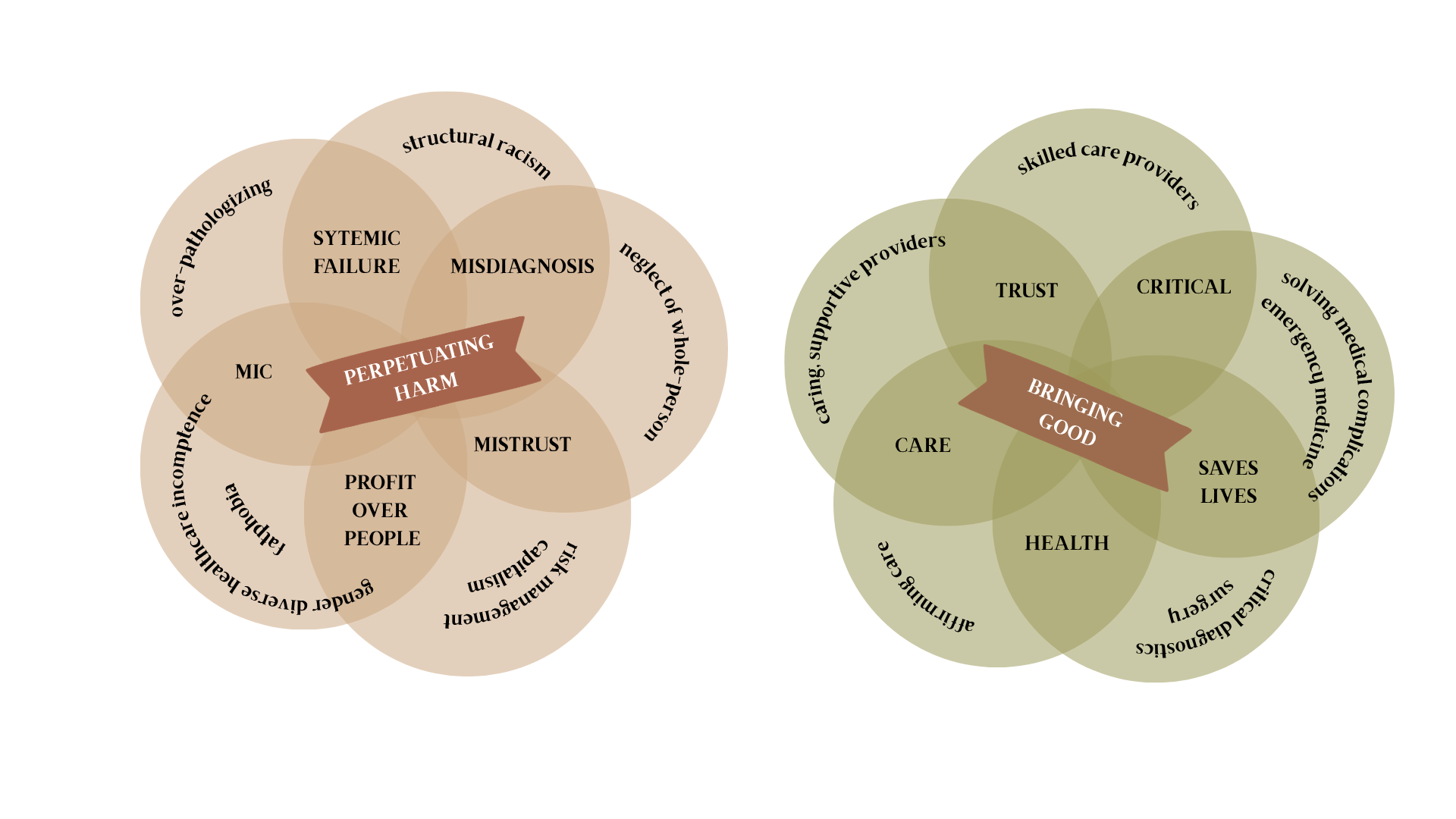
Medical systems have left a lot to be desired. Overpathologizing and neglect of a whole-person view of care has led to systemic failures and institutional distrust.
Systemic inequities from structural racism to incompetence in managing health in gender diverse bodies to ingrained fatphobia to infantilizing youth are baked into the way most medical care is delivered. Capitalism, risk management, and insurance drive too many medical decisions, building the bones for what is disaffectionately called the “medical industrial complex”.
Individuals and entities within the medical system (that one repro clinic or that one doctor) can also do immense good in people’s lives. Emergency medicine and surgery can save lives. Modern medications can provide affirming, essential, healthy alterations to body chemistry.
When experiencing medical complications, modern medicine often has solutions. Some physicians are incredibly kind, thoughtful, diligent, and skilled. Some nurses improve tough experiences with careful monitoring, emotional support, and identification of complications before they even happen. Diagnostic technicians provide insight into spaces we didn’t even know needed attention.
Our focus at Holistic Repro Project is on reproductive healthcare, which has been historically under-funded, marginalized, and sparsely supported in medical systems.
Founded on deep trauma and harm, modern gynecology, maternity care, and young family care is a fraught space in medical systems, with many reporting their needs, pain, and care plans were not holistically addressed nor taken seriously. Reproductive healthcare is inherently vulnerable and it is profoundly important that everyone receiving reproductive healthcare feels heard, respected, believed, and tenderly treated. From menses to menopause, our bodies deserve excellent care.
The work of Holistic Repro Project is to add to the spectrum of options available for reproductive healthcare: not prioritize some over others. We are pro-whatever-is-right-for-you.
We believe when you’re making choices about family planning that you should have robust information about LARCs, hormonal birth control, barrier methods, and fertility awareness and herbal formulas.
When exploring options for emergency contraception, abortion, and miscarriage management you should know about aspiration, medication and herbal, ceremonial, spiritual, and other holistic methods. Alongside the options of medical practitioners, you should learn about community care providers, activists, doulas, and yourself as caretakers of your body.
At Holistic Repro Project we resist medical supremacy. The medical system is not the only way to receive healthcare, nor is it always the best one.
We seek to add options with great care, attention, and community collaboration to the spectrum of choices that support our reproductive bodies and decisions. We also don’t overly villanize the medical system and acknowledge when it is the best option for care. Taking this nuanced approach, we hope to help people find where they best fit and individualize their reproductive healthcare.
If this post resonated with you, here are a few ways to continue exploring a more expansive approach to healthcare:
Reflect on your own experiences. Consider the ways medical care has supported you, and where you wished for more information, autonomy, or holistic care. What would have helped you feel more informed, respected, or empowered?
Build your care network. Think beyond a single provider. Consider what role physicians, midwives, doulas, herbalists, mental health professionals, trusted community members, and your own self-knowledge might each play in supporting your health and reproductive health.
Continue your education. Explore Holistic Repro Project's articles, online courses, and resources to deepen your understanding of reproductive health, history, justice, and whole-person care. Also, check out the MIC Timeline for a look at the history of the medical industrial complex.
Join the conversation. Share this post with someone who values thoughtful dialogue about healthcare. Meaningful change begins with informed, nuanced conversations.
About the Author: Molly is a midwife experienced and skilled in supporting a full spectrum of reproductive health. Molly has focused her work on pregnancy loss and abortion, and advocates for home-based midwifery models of care for all reproductive experiences. She lives in Toronto, Ontario on the traditional and contemporary lands of the Anishnaabe and the Mississaugas of the Credit.